
This is The Big Switch
Let's get started... with a conspiracy theory.

Welcome to The Big Switch, a newsletter covering the EV revolution from Lafayette American, a creative marketing agency in Detroit.
The overarching theme here is electrification, and we will follow its development from many different avenues: the impact on markets, culture, politics, and everyday people. We hope you find it as captivating as we do.
In this edition:
Toby Barlow has a conspiracy theory.
Links from around the internet we found fascinating.
To be clear, there is no reason to believe this is true.
Okay, for starters, I think we can all agree that Elon Musk is an interesting person. Some might even call him smart.
He sold the world its first Tesla back in 2008. There were a few other little EV brands playing in the space, but none of the big car companies were even thinking about electric vehicles. (In 2008, many of them were just trying to stay afloat.)
Tesla made headlines right out of the gate. The company had and continues to have strong competitive advantages. No unions. No dealer networks. No marketing spend. Incredible vertical integration. Sky-high valuation. Crazy gross-profit margins.
Which is why everyone loves Elon and Tesla stock. And, because he owns a good chunk of that stock, Elon quickly becomes the richest person in the world.
But guess what? There are still a lot of other car companies (China alone is home to 13 major ones and umpteen more little ones). And while none of them were thinking about EVs in 2008, fifteen years later they all are. Thanks to new laws in Europe and the US, they all have to be.
So, with this massive flood of increased competition looming like one of those Portuguese surfing waves about to crash down onto your monopolistic market, this might be the moment when Elon’s financial advisor leans across the desk and says “Hey buddy, maybe we diversify the portfolio?”
This is where he needs to start hatching a wicked lil’ scheme. Because the problem is, Elon can’t just sell his Tesla stock. His ego, personality, and celebrity are intricately wound up with the enormous value of that stock. He can’t just dump a bunch of it without everyone wondering “heyyy, wuddup bro?” And that might trigger some death spiral in the valuation, causing literally hundreds of billions of dollars to disappear into thin air.
So, (and here is where I pause to look up from my notes to gaze ominously around the room at all my enthralled guests) that’s where Elon’s sudden interest in Twitter comes into play.
In April, to help pay for his acquisition of Twitter, Musk raised $8.5 billion in a series of sales of Tesla stock. At the time he said he didn't have plans to sell any more.
But the market got rocky, people started talking about a recession, and lo and behold he did sell more. In August he sold about 7 billion more.
So Elon has pulled about 15 billion in value out of his company in order to purchase a media platform that really has no inherent value to him. I mean, you can look at his current empire and, squinting, kind of see how the pieces of SpaceX, Tesla, even Solar City all link together. But Twitter sits out there in a corn field all by itself. Buying it is a perfectly dumb idea.
Is it dumb? Or is it evil genius?
This is where my conspiracy theory kicks in:
Elon Musk never intended to buy Twitter. He’s seen the road ahead, sees Ford, VW, umpteen Chinese car companies going all out in their new EVs and he knows that he’ll eventually lose billions if he sits on his stock.
But – thanks to the cult of personality he has created – he can’t sell Tesla stock without inciting panic unless he has some very good reason to. Twitter serves as that reason. He could have picked any number of brands to play this game with, but Twitter makes perfect sense for him. It’s his favorite platform. The brand is shiny, headline-generating, and slightly controversial. Like a play straight out of any great heist, Elon’s move on the brand kicks up enough noise and dust that no one notices the duffel bags full of cash being loaded into the vans out back.
Sure, it may not be the perfect plan. He’ll have to pay lawyers and there’s probably some big SEC fine and a settlement looming (and he's already been there and done that). But that just helps throw any two-bit conspiracy theorists off the scent. Besides, when you’ve just pocketed 15 billion dollars, paying out a billion dollars is like tipping the blackjack dealer.
So, that’s it. It’s pretty harmless, as far as conspiracy theories go. But I’m pretty happy with it. Again, there is no reason to think this is true. But there is really no reason to think it is not true.
Unless, of course, he does buy the thing. Which would just be dumb.
- Toby Barlow
Links:
GM Sold More Plug-Ins In Q3 Than Ever Inside EVs
Chevrolet was up 226% YoY
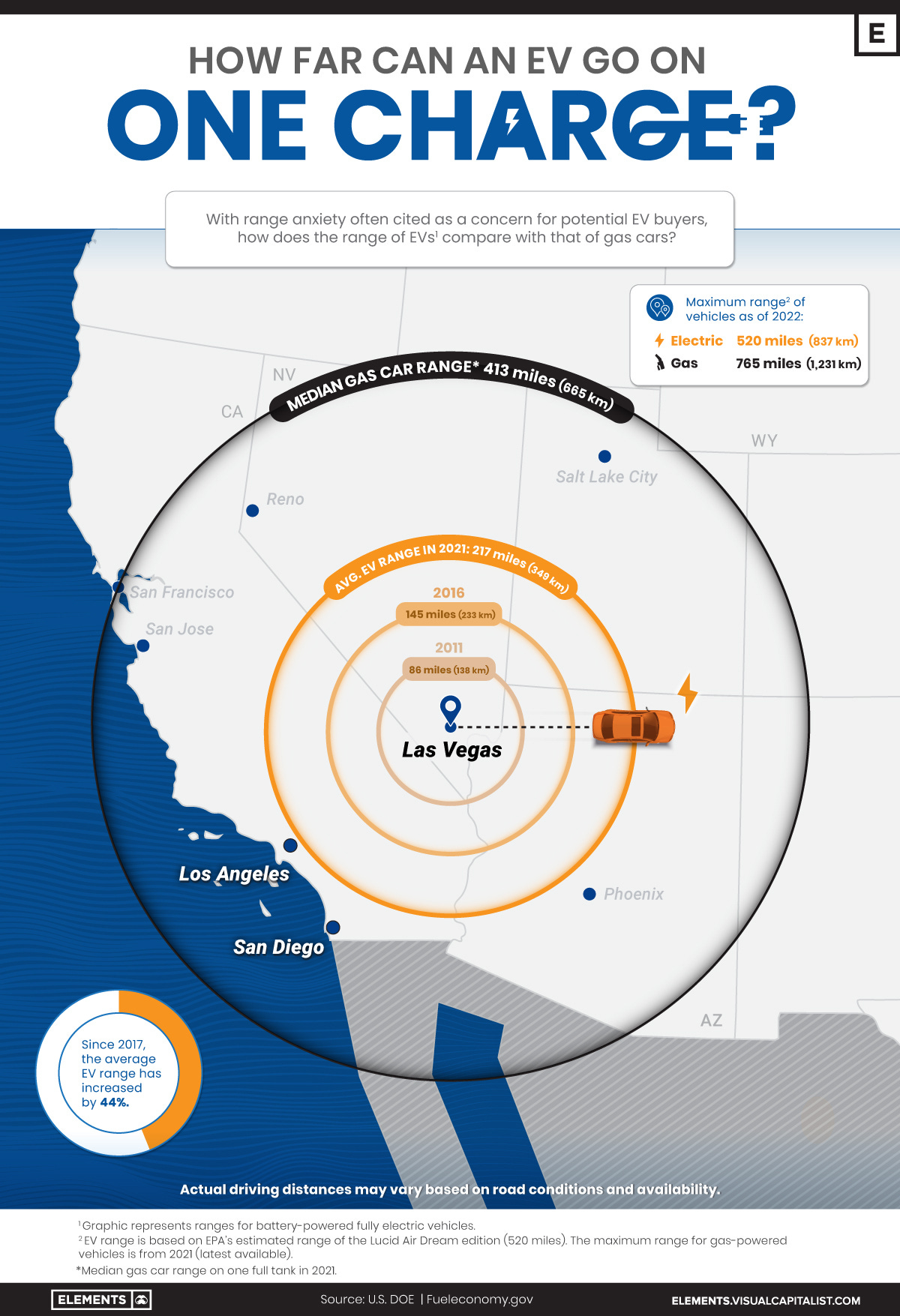
Visualizing the Range of Electric Cars vs Gas Cars Visual Capitalist
Who Gave the Battery Such Power? Noema
“Are personal cars really so important that swapping them for zero-tailpipe-emission ones must consume a significant chunk of climate financing, material and time?”
YouTuber makes video about his F-150 Lightning towing. Goes viral. Regrets it immediately.
And our favorite from the brilliant Trucks FoT newsletter (subscribe)
Toyota CEO Akio Toyoda talks about why he isn’t all-in on EVs (link). 'Toyota can produce eight 40-mile plug-in hybrids for every one 320-mile battery electric vehicle and save up to eight times the carbon emitted into the atmosphere.'